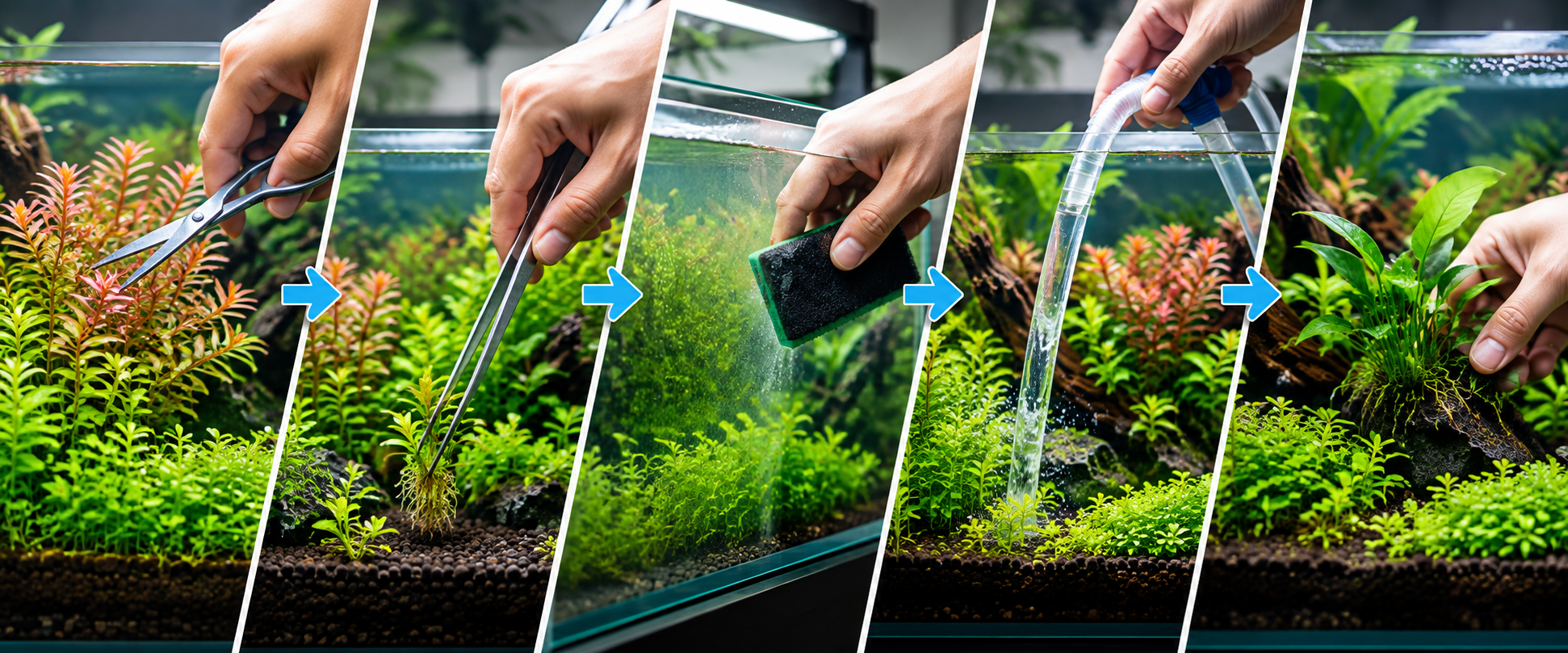
Aquarium plant maintenance does not need to be complicated. The key is to make small, regular corrections instead of waiting until the tank becomes overgrown or plants begin to decline. Most routine care involves trimming, removing damaged leaves, keeping lighting consistent and maintaining nutrients.
Inspect Plants Regularly
Take a quick look at your plants whenever you feed the fish or perform a water change. Watch for yellow leaves, damaged growth, algae buildup, overcrowded stems or plants that are shading each other.
Trim Before Plants Become Overgrown
Fast-growing stem plants should be trimmed before they become too dense. This helps light reach lower leaves and keeps water moving through the plant mass. Moss can also be trimmed to prevent thick mats from collecting debris.
Remove Dead or Damaged Leaves
Leaves that are badly damaged or decomposing will not recover. Removing them keeps the aquascape cleaner and makes it easier to judge the condition of healthy new growth.
Thin Runner Plants When Needed
Vallisneria and other plants that spread by runners can quickly move into areas where you do not want them. Remove or relocate runners before they crowd out slower-growing plants.
Keep the Lighting Schedule Consistent
Plants respond better to a stable routine than to frequent changes. Avoid suddenly increasing light intensity or adding many extra lighting hours when the plants are already growing well.
Maintain a Sensible Fertilizer Routine
Use fertilizers according to the needs of the plants and the product instructions. Heavy root feeders may benefit from root nutrition, while other plants rely more on nutrients in the water column.
Do Regular Water Changes
Water changes help remove accumulated waste and support stable aquarium conditions. They are especially useful after major trimming, replanting or when the tank has a high plant mass.
Deal With Algae Early
Slow-growing leaves can collect algae over time. Gently clean affected leaves where possible and review the balance of light, nutrients and CO₂ if algae repeatedly returns.
A Simple Weekly Routine
- Inspect leaves and new growth.
- Remove damaged leaves.
- Trim plants blocking light or flow.
- Check the lighting timer.
- Follow the fertilizer routine.
- Perform the planned water change.
Watch New Growth More Than Old Leaves
Older leaves naturally age and may show damage over time. New growth often gives a clearer picture of current plant health. If new leaves are forming with good shape and colour, the plant may be doing well even if a few older leaves need removal. This is especially important after plants have recently been moved or planted.
Maintain Water Flow Around Plants
Very dense plant growth can create areas with poor circulation. Trimming and thinning help water move through the plant mass so nutrients and CO₂ are distributed more evenly. Good circulation also reduces the amount of debris that settles between stems and mosses.
Clean Without Damaging the Plant
When cleaning algae or debris from leaves, work gently. Soft-leaved plants can tear easily, and rhizome plants can be pulled loose from hardscape. If a leaf is badly covered in algae and already deteriorating, removing that leaf may be more practical than trying to scrub it clean.
Reassess the Layout as Plants Mature
A planted aquarium changes over time. Plants that were perfectly positioned when small may later shade neighbours or block the view. Maintenance includes deciding which plants should be trimmed, divided, moved or removed so the overall layout remains balanced.
Keep a Simple Routine
You do not need to measure or adjust everything every day. A consistent weekly routine—inspection, trimming, water change and fertilizer check—makes it easier to notice gradual changes. When something goes wrong, you will also have a clearer idea of what changed and when.
Trim Different Plant Types Differently
Stem plants are usually cut and reshaped from the top or mid-stem, while rosette plants such as Cryptocoryne and Amazon Sword are maintained by removing individual older leaves near the base. Rhizome plants are generally trimmed by removing damaged or unwanted leaves without cutting away the entire rhizome. Moss is shaped by trimming the outer growth.
Do Not Over-Clean the Tank
A planted aquarium does not need to look sterile after every maintenance session. Aggressive cleaning can disturb roots, uproot plants and create unnecessary instability. Remove visible waste, clean the glass, trim plants and perform the planned water change while leaving healthy rooted areas undisturbed.
Maintenance After Major Trimming
After removing a large amount of plant mass, the aquarium’s nutrient demand can drop. Observe the tank over the following days instead of continuing to assume the same plant mass is present. Major pruning can also expose previously shaded areas to more light, so watch for algae and adjust gradually if needed.
If you want to go deeper into this topic, read our
Aquarium Plant Fertilizer Guide. You can also continue with
Aquarium Plant Problems: Troubleshooting Guide for the next practical step.
Frequently Asked Questions
How often should aquarium plants be trimmed?
Trim according to growth rate and layout. Fast-growing stems may need regular pruning, while slow rhizome plants often need much less frequent trimming.
Should damaged aquarium plant leaves be removed?
Leaves that are badly damaged or decomposing can be removed because they will not return to healthy tissue.
Do aquarium plants need weekly maintenance?
A short weekly inspection is useful for checking new growth, removing damaged leaves, controlling overgrowth and keeping the lighting and fertilizer routine consistent.
Final Thoughts
Keeping aquarium plants healthy becomes much easier when trimming, lighting, nutrients, water changes and plant density are managed as a regular routine. Small weekly corrections are usually more effective than waiting until plants become heavily overgrown or damaged.
Once the basic care requirements are in place, choose plants and equipment that fit the actual setup. You can explore the
Aquarium Plants collection at Sri Maha Aquarium. Where plant nutrition is relevant, you can also review
APT Complete planted aquarium fertilizer and choose it according to your aquarium’s needs.
For help selecting suitable aquarium plants, lighting, fertilizer or a complete planted aquarium setup, contact
Sri Maha Aquarium at
+91 91086 22022.