
Home » Aquarium filtration » how aquarium filters works
How Aquarium Filters Work: A Beginner's Guide to Aquarium Filtration
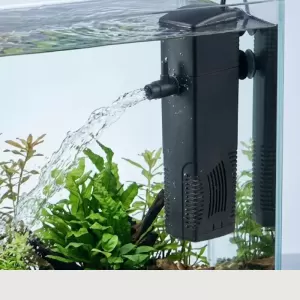
An aquarium filter does more than simply remove visible dirt from the water. It helps maintain water quality by removing suspended particles, providing a surface for beneficial bacteria, and, depending on the filter and media used, helping remove certain dissolved substances.
Different aquarium filters achieve these functions in different ways. Understanding how each type works can make it easier to decide which filtration system is suitable for your aquarium.
In this guide, we will explain how the main types of aquarium filters work, including internal filters, hang-on-back (HOB) filters, canister filters, sponge filters, and other commonly used filtration systems.
What Does an Aquarium Filter Actually Do?
An aquarium filter performs several important functions as water passes through it.
First, it helps remove suspended particles and debris from the water. Fish waste, uneaten food, plant debris and other particles can become trapped by mechanical filter media such as sponges, pads or filter floss.
Second, the filter provides surfaces where beneficial microorganisms can grow. These microorganisms are an important part of biological filtration and help process nitrogenous waste produced by fish and other organisms in the aquarium.
Depending on the type of media being used, a filter can also provide chemical filtration, where specific filter materials interact with certain dissolved substances.
So, an aquarium filter is not simply a device that catches dirt. It combines water movement, mechanical filtration and biological processes to support a more stable aquarium environment.
How Does an Aquarium Filter Work?
The basic working principle of most aquarium filters is simple:
Aquarium water → Filter intake → Filter media → Filtration → Filtered water returns to aquarium
A pump or air-driven system creates water movement. Aquarium water enters the filter through an intake and passes through one or more types of filter media.
As the water moves through the media, different things happen depending on the material:
- Mechanical media physically traps particles.
- Biological media provides surfaces for beneficial microorganisms.
- Chemical media can interact with particular dissolved substances.
After passing through the filtration area, the water is returned to the aquarium.
The exact path the water takes depends on the filter design, which is why different filter types can look very different while performing the same basic filtration function
How Do Different Types of Aquarium Filters Work?
Different aquarium filters use different methods to move water through their filtration media. The basic filtration principles remain similar, but the location of the media, pump and water path can vary.
How Does an Internal Aquarium Filter Work?
An internal filter sits inside the aquarium and uses a small pump to draw water through its filter media.
Water enters through the intake and passes through the filter cartridge, sponge or other media inside the unit. The media captures particles and provides surfaces for biological filtration.
The pump then pushes the filtered water back into the aquarium through the outlet.
Because the filtration unit is located inside the tank, the entire filtration process takes place within the aquarium.
A practical example is the EHEIM Pickup Internal Filter, which uses a compact internal design with removable filter components.
How Does a Hang-On-Back (HOB) Filter Work?
A hang-on-back filter is positioned on the outside back wall of the aquarium.
A pump draws aquarium water through an intake tube. The water travels into the filter chamber, passes through the filter media and then flows back into the aquarium.
The filter chamber provides space for different types of media, depending on the filter design.
The main characteristic of a HOB filter is therefore its external hanging position and water path from the aquarium into the filter chamber and back again.
How Does a Canister Filter Work?
A canister filter places the main filtration chamber outside the aquarium.
Water is drawn from the aquarium through an intake tube and travels through a hose to the external canister. Inside the canister, water passes through the different layers or baskets containing filter media.
Depending on the setup, these stages can include mechanical, biological and chemical filtration.
After passing through the media, the pump sends the filtered water back into the aquarium through the return hose.
The important point is that the filtration chamber is located outside the aquarium, allowing the canister to contain multiple layers of filter media.
For example, the EHEIM Classic Canister Filter uses this external filtration approach.
How Does a Sponge Filter Work?
A sponge filter uses a sponge as its main filtration material and normally works with an air pump.
As air bubbles rise through the filter, they create upward water movement. This movement draws aquarium water through the sponge.
The sponge performs two important functions.
It physically traps some suspended particles, while its porous surface provides an area where beneficial microorganisms can colonize.
Unlike powered filters that use an electric pump directly, a sponge filter relies on air-driven water movement.
How Does an Undergravel Filter Work?
An undergravel filter uses the aquarium substrate as part of the filtration system.
A plate is positioned underneath the gravel or substrate, and water is drawn through the substrate. An airlift system or pump then moves the water upward and returns it to the aquarium.
As water passes through the substrate, the gravel provides a large surface area where beneficial microorganisms can live.
The substrate therefore becomes an important part of the biological filtration process.
How Does Filter Media Work Inside an Aquarium Filter?
Filter media determines what happens to the water as it passes through the filtration system.
Different materials perform different functions, and they can generally be grouped into three categories.
Mechanical Filtration
Mechanical filter media physically captures particles from aquarium water.
Common examples include:
- Filter sponge
- Filter pads
- Filter floss
As water passes through the material, larger particles become trapped.
The effectiveness of mechanical filtration depends partly on the structure and density of the media. Finer materials can capture smaller particles, but they can also become clogged more quickly.
Biological Filtration
Biological filtration works differently.
Instead of physically trapping waste, biological media provides a surface where beneficial microorganisms can colonize.
These microorganisms are involved in processing nitrogenous waste produced in the aquarium.
Porous materials such as ceramic media and other biological filter media can provide a large surface area for these microorganisms.
This is one reason why biological filtration is an important part of maintaining a stable aquarium.
Chemical Filtration
Chemical filtration uses specific materials that interact with substances dissolved in aquarium water.
Activated carbon and specialised resins are examples of chemical filter media.
Chemical media is not automatically required in every aquarium. Its use depends on the condition of the aquarium and what the aquarist is trying to remove or control.
What Happens to Fish Waste in an Aquarium?
Fish and other aquarium organisms continuously produce waste. Uneaten food, decomposing plant material and other organic matter also contribute to the aquarium’s waste load.
Some of this material can be physically trapped by mechanical filter media.
However, not all waste simply gets caught inside the filter.
Biological filtration is involved in the aquarium nitrogen cycle.
In simplified terms:
Ammonia → Nitrite → Nitrate
Beneficial microorganisms help convert toxic ammonia into nitrite and subsequently nitrite into nitrate through biological processes.
This is why a filter containing established biological media can be important even when the aquarium water already appears visually clean.
Clear water and biologically processed water are not exactly the same thing.
How Does Water Flow Through an Aquarium Filter?
For filtration to take place, aquarium water needs to move through the filtration system.
The basic path is:
Intake → Filter media → Pump or water movement → Return
The exact arrangement differs between filter types.
In an internal filter, the entire process happens within a compact unit inside the aquarium.
In a HOB filter, water moves from the aquarium into the hanging filter chamber and then returns to the tank.
In a canister filter, water travels through external hoses to the canister before returning to the aquarium.
In a sponge filter, air movement creates the water flow through the sponge.
The important principle is that water must come into contact with the appropriate filter media for that media to perform its intended function.
Why Does Aquarium Filter Media Become Dirty?
Filter media naturally collects material as aquarium water passes through it.
Mechanical media usually becomes dirty first because it captures suspended particles and debris.
As debris accumulates, water may have more difficulty passing through the material. This can reduce water movement through the filter.
Biological media can also accumulate debris over time, although its primary purpose is to provide a surface for beneficial microorganisms.
This is why filter maintenance needs to consider both cleanliness and biological filtration rather than simply trying to make every piece of media look completely clean.
Does Every Aquarium Filter Work the Same Way?
| Filter Type | How Water Moves Through the System |
|---|---|
| Internal Filter | Water is drawn through media inside the aquarium and returned by a pump. |
| HOB Filter | Water moves from the aquarium into an external hanging chamber and back. |
| Canister Filter | Water travels through hoses to an external filtration chamber before returning. |
| Sponge Filter | Air-driven movement pulls water through the sponge. |
| Undergravel Filter | Water is drawn through the aquarium substrate. |
The difference is mainly in how the water reaches the filtration media and how the filtered water returns to the aquarium.
The filtration processes themselves can overlap between different filter designs.
What Makes Aquarium Filtration Effective?
ffective filtration depends on more than simply having a filter running.
The filtration system needs:
- Consistent water movement
- Appropriate filter media
- Sufficient biological surface
- Effective mechanical filtration
- Properly maintained media
- A water flow path that allows aquarium water to pass through the filtration area
The exact requirements depend on the aquarium, livestock and filtration system being used.
This is also why simply choosing a filter based on its advertised flow rate does not tell the whole story. The actual filtration setup and media arrangement also matter.
Common Aquarium Filter Mistakes
Allowing Mechanical Media to Become Completely Clogged
When mechanical media becomes heavily blocked with debris, water may have difficulty passing through it.
Replacing All Biological Media at Once
Established biological media contains beneficial microorganisms. Replacing everything at the same time can remove a significant portion of the established biological surface.
Assuming Clear Water Means Complete Filtration
Water can look clear while biological processes are still important for managing aquarium waste
Cleaning Filter Media Too Aggressively
The goal of maintenance is not necessarily to make every piece of filter media look brand new. Biological media should be handled in a way that preserves its useful bacterial population.
Ignoring Reduced Water Flow
A noticeable reduction in flow can indicate clogged media, an obstructed intake, an impeller issue or another filtration problem.
Frequently Asked Questions
How does an aquarium filter clean water?
An aquarium filter moves water through filtration media. Mechanical media captures particles, while biological media provides surfaces for microorganisms involved in processing nitrogenous waste.
How does a canister filter work?
A canister filter draws aquarium water through an intake, sends it through filter media inside an external chamber and returns the filtered water to the aquarium.
Does an aquarium filter remove fish waste?
A filter can physically capture some solid waste, but it does not simply remove all waste from the aquarium. Biological filtration helps process nitrogenous waste through the nitrogen cycle.
How does a sponge filter work?
A sponge filter uses air-driven water movement to draw aquarium water through a porous sponge. The sponge provides both mechanical filtration and a surface for biological filtration
Why is biological filtration important?
Biological filtration provides surfaces for beneficial microorganisms that help process ammonia and nitrite, which are toxic to aquatic organisms.
Why does aquarium filter flow become weak?
Reduced flow can occur because of clogged mechanical media, an obstructed intake, accumulated debris, an impeller problem or other restrictions in the filtration system
Does every aquarium filter need chemical media?
No. Chemical media has specific uses and is not necessarily required in every aquarium. The need depends on the aquarium’s condition and the purpose of the particular media.
Final Thoughts
Understanding how an aquarium filter works makes it easier to understand what is happening inside your aquarium rather than viewing the filter simply as a device that makes the water look clean. Although internal, HOB, canister, sponge and undergravel filters use different designs, the basic principle remains the same: water is moved through a filtration area where particles can be trapped and biological processes help manage aquarium waste.
Once you understand this process, you can better understand why filter media, water flow and regular maintenance are important parts of aquarium filtration.