
Aquarium filters can develop problems even when the filter itself is not faulty. Clogged media, dirty impellers, trapped air, blocked intakes, incorrect assembly and unsuitable media packing can all reduce performance.
This guide covers common symptoms and the checks you can make before assuming the filter needs replacement. Always disconnect electrical power before opening or servicing aquarium equipment.
Quick Troubleshooting Table
| Problem | Common Checks | First Action |
|---|---|---|
| Low water flow | Clogged media, blocked intake, dirty impeller, dirty hoses | Inspect and clean the water path. |
| Filter is noisy | Air, impeller debris, poor seating, vibration | Check priming and impeller assembly. |
| Filter will not start | Power, impeller, priming, water level | Disconnect power and follow manufacturer restart procedure. |
| Air bubbles from outlet | Trapped air, low water level, intake drawing air | Check water level and purge trapped air. |
| Canister leak | O-ring, hose connections, valves, trapped debris | Disconnect power and isolate the filter immediately. |
| Cloudy water despite filtration | Media choice, maintenance, aquarium cycle, excess waste | Identify the cause instead of simply increasing flow. |
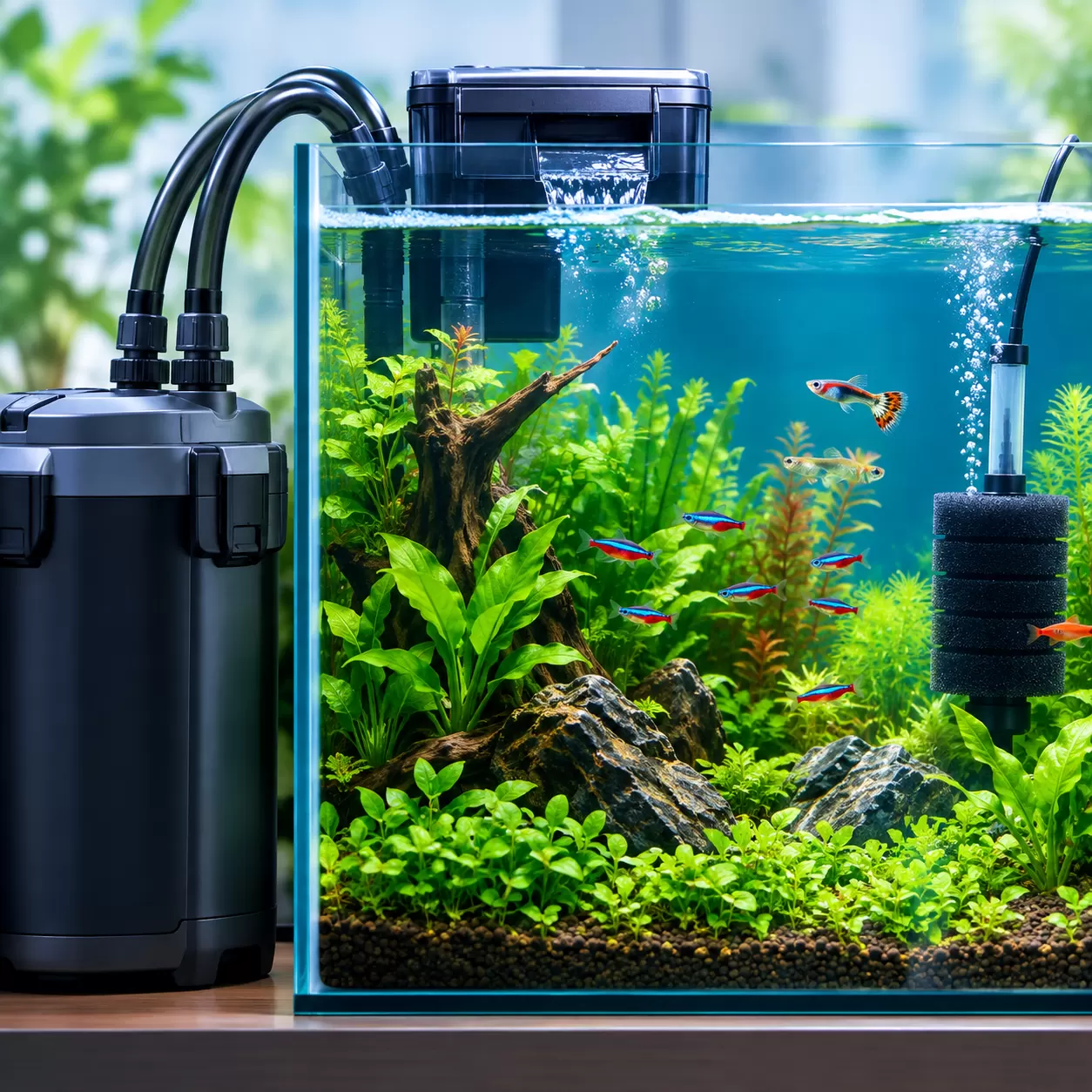
Problem 1: Aquarium Filter Has Low Flow
Reduced flow is one of the most common filtration complaints. Start with the intake strainer and mechanical media because debris can restrict water before it reaches the pump. If those are clear, inspect the impeller, hose interiors, valves and outlet. In canister filters, long-term biofilm accumulation inside hoses can significantly reduce flow.Problem 2: Filter Is Making More Noise Than Usual
A sudden increase in noise can indicate trapped air, debris in the impeller chamber, a worn or poorly seated impeller, or vibration between the filter and a hard surface.Problem 3: Filter Will Not Start After Cleaning
Check that all parts were reassembled correctly and that the impeller can rotate freely. HOB and canister filters may need water or priming before restart, depending on the model.Problem 4: Air Bubbles Are Coming from the Outlet
Some bubbles immediately after maintenance can be trapped air leaving the filter. Persistent bubbles may indicate that the intake is drawing air, the water level is too low, or air is entering through a connection.Problem 5: Canister Filter Is Leaking
Disconnect electrical power and stop the water flow immediately. Check the main seal, O-ring, valve block, hose fittings and locking mechanism.Problem 6: HOB Filter Is Not Restarting
Many HOB filters need adequate aquarium water level and water in the filter chamber to restart correctly. Check the intake tube, impeller and chamber for air or debris. If you are using a HOB filter such as the SunSun HBL series, follow the specific product instructions for startup and maintenance.Problem 7: Internal Filter Flow Is Weak
Internal filters commonly lose flow when the sponge or intake is clogged. Remove visible debris and inspect the impeller. Also check whether plant leaves or substrate are blocking the intake. The EHEIM Pickup is an example of a compact internal filter where routine cartridge and impeller maintenance helps preserve flow.Problem 8: Water Is Still Cloudy
A filter cannot correct every cause of cloudy water. New-tank bacterial blooms, disturbed substrate, algae, excess food or insufficient mechanical filtration can all make water cloudy.Problem 9: Filter Media Clogs Very Quickly
Rapid clogging can indicate heavy feeding, a high fish load, fine particles from substrate or media that is too fine for the first filtration stage. A coarse mechanical stage placed before fine polishing media can help capture larger debris first. Review How to Choose Aquarium Filter Media for media-order guidance.Problem 10: Filter Works but Aquarium Has Dead Spots
The filter may be operating correctly while circulation through the aquarium is poor. Long tanks, dense plants and hardscape can create areas with little movement.Problem 11: Flow Is Too Strong
Some fish, shrimp and planted layouts can be disturbed by excessive current. If the filter has adjustable flow, reduce it within the manufacturer’s operating range.Problem 12: Filter Smells Bad
A strong unpleasant smell can be associated with trapped decomposing waste or severely dirty media. Inspect the filter and aquarium promptly, remove accumulated organic debris and confirm that water is flowing normally through the media.Preventing Common Filter Problems
- Clean mechanical media before it becomes severely clogged.
- Inspect the impeller during routine maintenance.
- Keep intake strainers free of plant leaves and debris.
- Clean canister hoses when internal buildup reduces flow.
- Do not overpack media baskets.
- Use the correct seals and replacement parts.
- Follow the filter manufacturer’s installation and restart instructions.