
Filter media is the material inside an aquarium filter that performs much of the actual filtration. Choosing the filter body is important, but the media arrangement determines how debris is captured, where beneficial bacteria can grow and whether a specific chemical treatment is being used.
This guide explains the three main media categories—mechanical, biological and chemical—and how to combine them without filling the filter with unnecessary material.
Quick Guide to Aquarium Filter Media
| Media Type | Main Purpose | Common Examples | Maintenance Approach |
|---|---|---|---|
| Mechanical | Captures suspended particles and debris | Coarse sponge, fine sponge, filter pad, floss | Clean or replace when clogged, depending on product. |
| Biological | Provides surface area for beneficial bacteria | Ceramic media, sintered media, porous biomedia, sponge | Rinse gently only when debris buildup restricts flow. |
| Chemical | Targets specific dissolved substances | Activated carbon, phosphate-removal media and other specialty media | Use for a defined purpose and replace according to product instructions. |
Mechanical Filtration
Mechanical media physically traps particles as water passes through the filter. Coarse media captures larger debris, while fine pads or floss can capture smaller suspended particles and improve water clarity. Mechanical filtration also protects biological media from becoming overloaded with debris. If the mechanical stage is allowed to clog, overall filter flow can fall.Coarse vs Fine Mechanical Media
Coarse sponge is useful as an early stage because it captures larger particles without clogging as quickly as very fine media. Fine pads or polishing material are better placed after coarse debris has already been removed.Biological Filtration
Biological media provides surfaces for beneficial bacteria involved in processing nitrogenous waste. Common forms include porous ceramic and other high-surface-area media, as well as reusable sponges.
How Much Biological Media Do You Need?
There is no single quantity for every aquarium. The requirement depends on fish load, feeding, filter design, media type and the total biological capacity of the aquarium.Chemical Filtration
Chemical media is used for specific water-treatment purposes. Activated carbon is one familiar example, while specialty media may target substances such as phosphate or particular contaminants. Chemical media should not be treated as a compulsory permanent stage in every freshwater aquarium. Use it when you have a clear reason and follow the product instructions.What Order Should Filter Media Go In?
The exact water path differs by filter, so always confirm which direction water travels through your model. A common principle is:- Coarse mechanical filtration to capture larger debris.
- Finer mechanical filtration where polishing is required.
- Biological media after much of the solid debris has been removed.
- Specialty chemical media where required and appropriate for that filter design.
Filter Media in Canister Filters
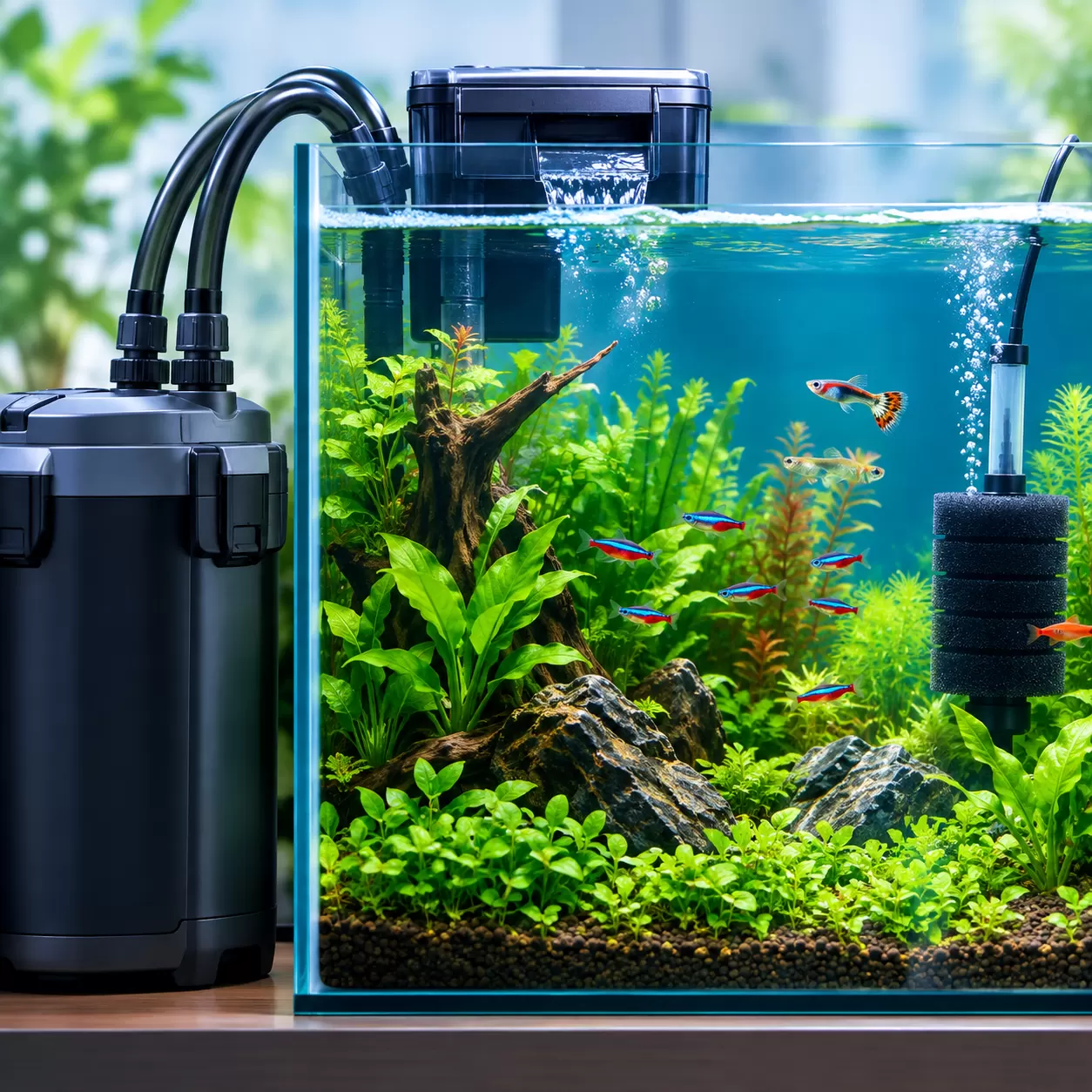
Canister filters often provide several baskets or chambers, making it easier to separate mechanical, biological and specialty media. The correct basket order depends on the direction water travels through the canister. For more context, see Canister Filter vs HOB vs Internal Filter.Filter Media in HOB Filters
HOB filters usually have less media space than large canisters, so each stage should have a clear purpose. Avoid filling all available space with very fine media because this can restrict flow quickly.Filter Media in Internal Filters
Compact internal filters may use sponges, cartridges or modular media chambers. Because space is limited, keeping the media clean enough to maintain flow is especially important.Filter Media for Planted Aquariums
Planted aquariums still benefit from mechanical and biological filtration. The amount and arrangement should reflect fish load, plant mass, aquascape debris and the filter design. See Best Filter for a Planted Aquarium for circulation and CO₂ considerations.Filter Media for High Fish Load
Heavily stocked aquariums often generate more solid waste and place greater demand on biological filtration. Effective coarse mechanical prefiltration can help prevent biological media from becoming packed with debris.Should You Replace Biological Media?
Many reusable biological media products are intended for long-term use. Replace them when they are physically degraded or when the manufacturer specifies replacement, rather than on an arbitrary short schedule.How to Clean Filter Media
Clean reusable mechanical media when it becomes clogged. Biological media usually requires only gentle rinsing when debris accumulation is restricting water movement. For a complete routine, see How to Clean an Aquarium Filter.Common Filter-Media Mistakes
- Using only fine polishing media and causing rapid clogging.
- Putting biological media before heavy mechanical debris removal when the filter design allows better staging.
- Replacing all biological media at once.
- Using chemical media without a defined purpose.
- Overpacking baskets and restricting water flow.
- Copying another filter’s media order without checking your own water-flow direction.