
Arowana can be an excellent aquarium fish when its adult size, behaviour and water requirements are understood before purchase. This guide covers the practical points that matter most: tank size, water quality, filtration, food, compatible tank mates and routine maintenance.
Before choosing any fish, it is useful to review the wider Aquarium Fish in Bangalore collection so that aquarium size and compatibility can be planned before adding livestock.
Arowana Care at a Glance
| Care Factor | General Guidance |
|---|---|
| Adult size | Large species; adult size depends on variety and can exceed 60 cm |
| Tank planning | Use a very large aquarium with substantial swimming length; plan for adult size, not juvenile size |
| Temperature | Approximately 24–30°C, depending on species |
| Water | Generally around neutral to mildly acidic/alkaline water; prioritize stability |
| Social behaviour | Usually best planned carefully because Arowanas are large predatory fish |
| Food | High-quality carnivore/omnivore foods appropriate to the species and fish size |
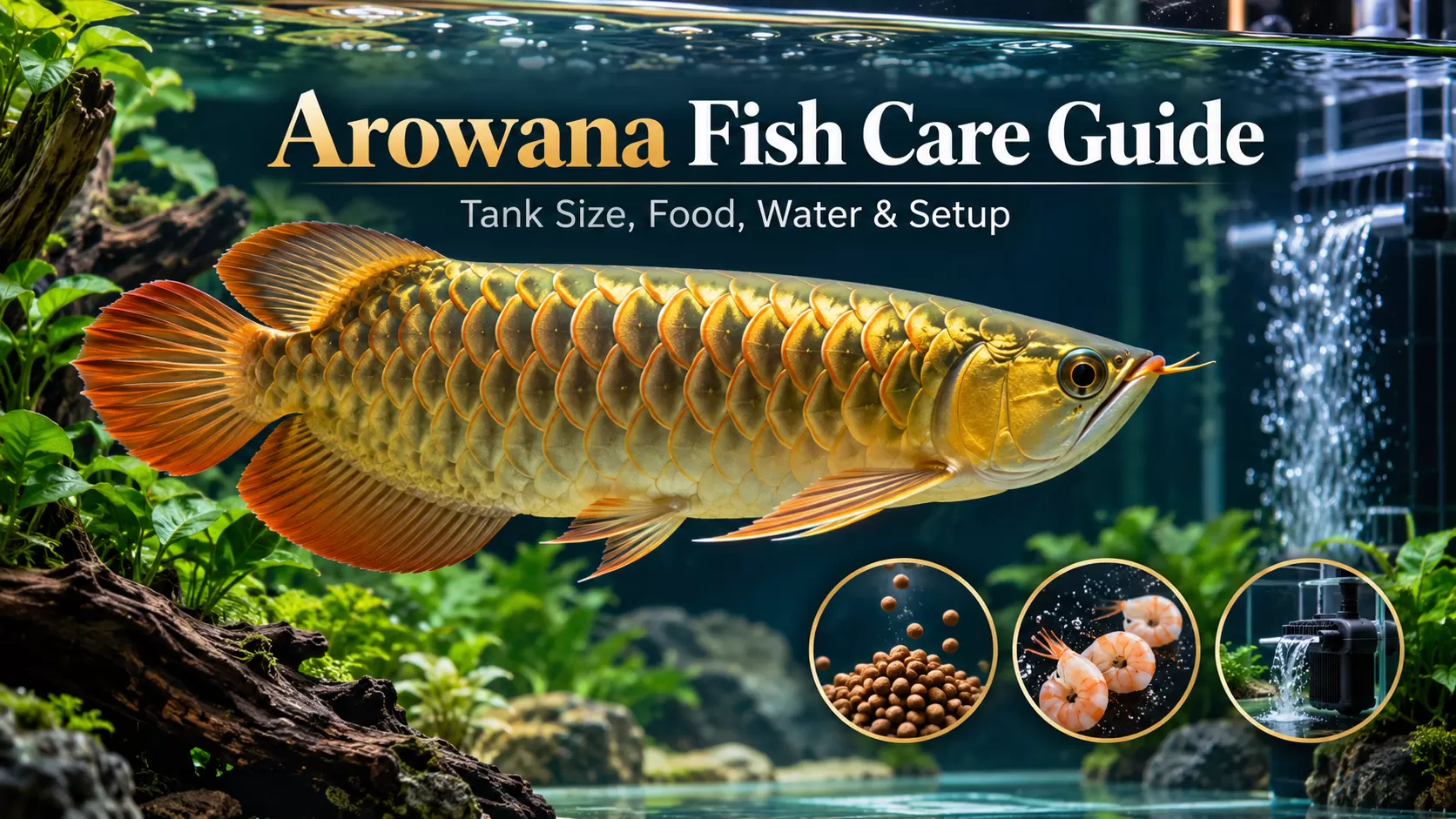
Understanding Arowana Before You Buy
The most common mistake is choosing a fish because it looks suitable in the shop without considering its adult size and behaviour. Arowanas are powerful jumpers, so a secure lid and strong filtration are essential.
Plan the aquarium around the adult fish. This includes swimming space, filtration capacity, secure covers where necessary, compatible tank mates and a realistic maintenance routine.
Recommended Tank Size and Aquarium Layout
Use a very large aquarium with substantial swimming length; plan for adult size, not juvenile size. Aquarium dimensions are often as important as total litres because active swimmers need length, tall-bodied fish need vertical space and territorial fish need room to establish areas without constant conflict.
Use stable decor and leave suitable open swimming zones. Plants, wood and rock can provide visual barriers and cover, but should not reduce usable space excessively.
Water Temperature and Water Quality
Approximately 24–30°C, depending on species. Generally around neutral to mildly acidic/alkaline water; prioritize stability. Avoid making rapid changes just to reach a target number. Stable, dechlorinated water and consistent maintenance are more important than repeatedly adjusting chemistry.
Test ammonia and nitrite in a new or unstable aquarium and keep both at safe levels before adding fish. Regular partial water changes help control accumulated waste and support long-term stability.
Filtration and Maintenance
Choose a filter that matches the aquarium volume and waste load without creating unsuitable current. Mechanical media helps capture debris while biological media supports beneficial bacteria involved in processing fish waste.
Clean mechanical media when flow begins to drop and service the impeller and intake as needed. Avoid replacing all established biological media at the same time. Consistent maintenance is usually more useful than occasional aggressive cleaning.
What to Feed Arowana
High-quality carnivore/omnivore foods appropriate to the species and fish size. Feed small portions that can be consumed promptly rather than large meals that leave uneaten food in the aquarium.
Variety can help provide a broader nutritional profile, but the food size and type should match the fish. Remove uneaten food when necessary because overfeeding can quickly affect water quality.
Social Behaviour and Grouping
Usually best planned carefully because Arowanas are large predatory fish. Observe individual behaviour after introduction because temperament can vary with age, sex, aquarium size and the available territory.
Choosing Tank Mates
Usually best planned carefully because Arowanas are large predatory fish. Tank mates should be selected by adult size, temperament, preferred temperature, swimming level and feeding behaviour rather than by appearance alone.
Do not rely only on a generic compatibility chart. Watch for chasing, fin damage, hiding, inability to feed or persistent stress after new fish are introduced.
How to Introduce New Arowana
- Make sure the aquarium is cycled and temperature is stable.
- Dim the aquarium lights before introducing the new fish.
- Acclimate gradually to reduce sudden temperature and water-parameter changes.
- Use a net where appropriate rather than pouring transport water into the aquarium.
- Observe closely for the first few days for feeding response, breathing, injuries and aggression.
Common Care Mistakes
- Choosing an aquarium based only on the juvenile fish size.
- Adding fish before the aquarium is biologically established.
- Overfeeding and allowing waste to accumulate.
- Using unsuitable tank mates.
- Ignoring reduced filter flow or deteriorating water quality.
- Making sudden large changes to temperature or water chemistry.
Explore Arowana and Related Fish
To see currently listed varieties, visit the Arowana fish collection on Sri Maha Aquarium.
For additional fish-care reading, see Oscar Fish Care Guide: Tank Size, Food, Tank Mates & Maintenance and Angelfish Care Guide: Tank Size, Food, Tank Mates & Water Requirements.
Relevant Sri Maha Aquarium Product
Depending on your aquarium plan, you may find Hikari Tropical Food Sticks for Arowana & Carnivorous Fish relevant. Always match food, tank equipment and accessories to the fish size, aquarium volume and actual care requirements.
Frequently Asked Questions
Is Arowana suitable for beginners?
That depends on the species, aquarium size and the keeper’s ability to maintain stable water. Some varieties are easier than others, so confirm adult size and care requirements before buying.
How often should I feed Arowana?
Use small, controlled portions on a regular routine and adjust the amount to the fish’s size, age and food type. Avoid leaving excess food in the aquarium.
How often should I change aquarium water?
There is no single schedule for every tank. Base water changes on stocking, feeding, filter performance and measured water quality. Consistent partial changes are usually preferable to infrequent extreme cleaning.
Can I keep Arowana in a planted aquarium?
It depends on the species and aquascape. Many aquarium fish can live in planted tanks, but larger or more active fish may uproot plants or require more open swimming space.
Final Thoughts
Keeping Arowana successfully becomes much easier when tank size, water stability, filtration, feeding and tank-mate selection are planned together. The aquarium should be prepared for the fish’s adult size and natural behaviour rather than only its size at the time of purchase.
Once the aquarium is cycled and the basic care requirements are in place, choose livestock and equipment that fit the actual setup. You can explore the Arowana collection at Sri Maha Aquarium. If you are setting up or maintaining this species, you can also review Hikari Tropical Food Sticks for Arowana & Carnivorous Fish where it is relevant to your setup.
For help selecting suitable aquarium fish, food, filtration or a complete setup, contact Sri Maha Aquarium at +91 91086 22022 or visit our Aquarium Fish in Bangalore page.