Aquarium plants need light for photosynthesis, but more light is not always better. The right amount depends on the plant species, aquarium depth, CO₂ availability and nutrient supply. A balanced light level is more useful than simply choosing the brightest fixture.
Low-Light, Medium-Light and High-Light Plants
Low-light plants such as Anubias and Java Fern can grow under modest lighting. Medium-light plants need stronger, more consistent illumination. High-light plants, including many carpets and colourful stems, generally perform best when stronger light is supported by stable nutrients and CO₂.
How Long Should the Light Stay On?
Many planted aquariums do well with a consistent daily photoperiod rather than very long lighting hours. A shorter stable schedule is usually easier for beginners to manage. If plants are healthy, there is no reason to keep extending the lighting period simply to make them grow faster.
Intensity and Duration Are Different
Intensity is the amount of useful light reaching the plant. Duration is how long that light is available. Leaving a weak light on for many extra hours does not always compensate for insufficient intensity, and extending the photoperiod can increase algae pressure.
Tank Depth Matters
Light loses strength as it travels through water. A fixture that works well over a shallow tank may not provide the same useful light at the substrate level of a deeper aquarium. Plant placement also matters because driftwood and taller plants can create shaded areas.
Signs Plants May Need More Light
- Weak or stretched growth.
- Poor performance from light-demanding foreground plants.
- Lower leaves dropping from some stem plants.
- New growth staying smaller than expected.
Signs the Tank May Have Too Much Light
Strong algae growth, stressed plants or a tank that becomes difficult to balance can indicate too much light relative to available CO₂ and nutrients. The solution is not always more fertilizer. Sometimes reducing intensity or duration is the better correction.
Choose Lighting for the Plants You Keep
A low-tech aquarium with Anubias, Java Fern and Cryptocoryne does not need the same lighting strategy as a CO₂-injected aquascape with carpeting plants and demanding red stems. Choose the fixture around your plant list and tank dimensions.
Start With a Stable Photoperiod
For a new planted aquarium, consistency is more important than constantly adjusting the timer. Choose a reasonable daily lighting period and keep it stable while you observe the plants. If algae increases quickly or plants show stress, make small changes and give the tank time to respond instead of changing the schedule every day.
Why Stronger Light Increases Demand
As light intensity increases, plants have the potential to grow faster. Faster growth increases their need for carbon and nutrients. This is why a very bright light can make a low-tech aquarium harder to manage. If the tank cannot provide enough CO₂ or nutrients to match the light level, plant growth may become unstable and algae can gain an advantage.
Use Plant Response, Not Brightness Alone
A light can look extremely bright to our eyes and still not be ideal for the plants at the bottom of a deep tank. Conversely, a moderate-looking fixture may be perfectly suitable for low-light plants. Watch the actual plant response: compact growth, healthy new leaves and stable colour are more useful indicators than visual brightness alone.
Shading Is Part of Lighting
Even with a good fixture, plants can be shaded by tall stems, floating plants, driftwood or large leaves. Slow-growing plants may tolerate shade, but demanding carpets and short foreground species can suffer when taller plants block the light. Trimming and thoughtful placement are therefore part of lighting management.
When Should You Upgrade the Light?
Consider a stronger or more suitable planted-tank light when your current fixture clearly cannot support the species you want, especially in a deeper aquarium. Do not upgrade only because plant growth is slow. First check whether the plant is naturally slow-growing and whether nutrients, CO₂ and planting method are appropriate.
Use a Timer for Consistency
A simple timer is one of the most useful tools for planted-aquarium lighting. Turning the light on and off at different times every day makes it harder to judge plant response and can create an inconsistent routine. A fixed schedule gives both the plants and the aquarist a stable baseline from which to make gradual adjustments.
Do Plants Need a Night Period?
Yes. Aquarium lights should not remain on continuously. Plants have natural light and dark cycles, and fish also benefit from a regular night period. Keeping the aquarium illuminated for very long periods does not create unlimited plant growth and can encourage algae. A controlled daytime photoperiod followed by darkness is the practical approach.
If you want to go deeper into this topic, read our
Do Aquarium Plants Need CO₂?. You can also continue with
Aquarium Plant Problems: Troubleshooting Guide for the next practical step.
Frequently Asked Questions
How many hours should aquarium plant lights stay on?
A consistent daily photoperiod is more important than very long lighting hours. Many planted tanks are started with a moderate schedule and adjusted gradually according to plant and algae response.
Does stronger light always make aquarium plants grow better?
No. Stronger light increases plant demand for CO₂ and nutrients. If the rest of the setup cannot support that demand, stronger lighting can make the tank harder to balance.
Do aquarium plants need darkness at night?
Yes. Aquarium plants and livestock benefit from a regular day-and-night cycle, so the light should not remain on continuously.
Final Thoughts
Aquarium plant lighting works best when intensity, duration, tank depth, nutrients and CO₂ are considered together. The goal is not maximum brightness but enough stable light for the plants you actually keep without making the aquarium unnecessarily difficult to balance.
Once the basic care requirements are in place, choose plants and equipment that fit the actual setup. You can explore the
Aquarium Plants collection at Sri Maha Aquarium. Where plant nutrition is relevant, you can also review
Neo Helios Ultra Slim planted aquarium LED light and choose it according to your aquarium’s needs.
For help selecting suitable aquarium plants, lighting, fertilizer or a complete planted aquarium setup, contact
Sri Maha Aquarium at
+91 91086 22022.

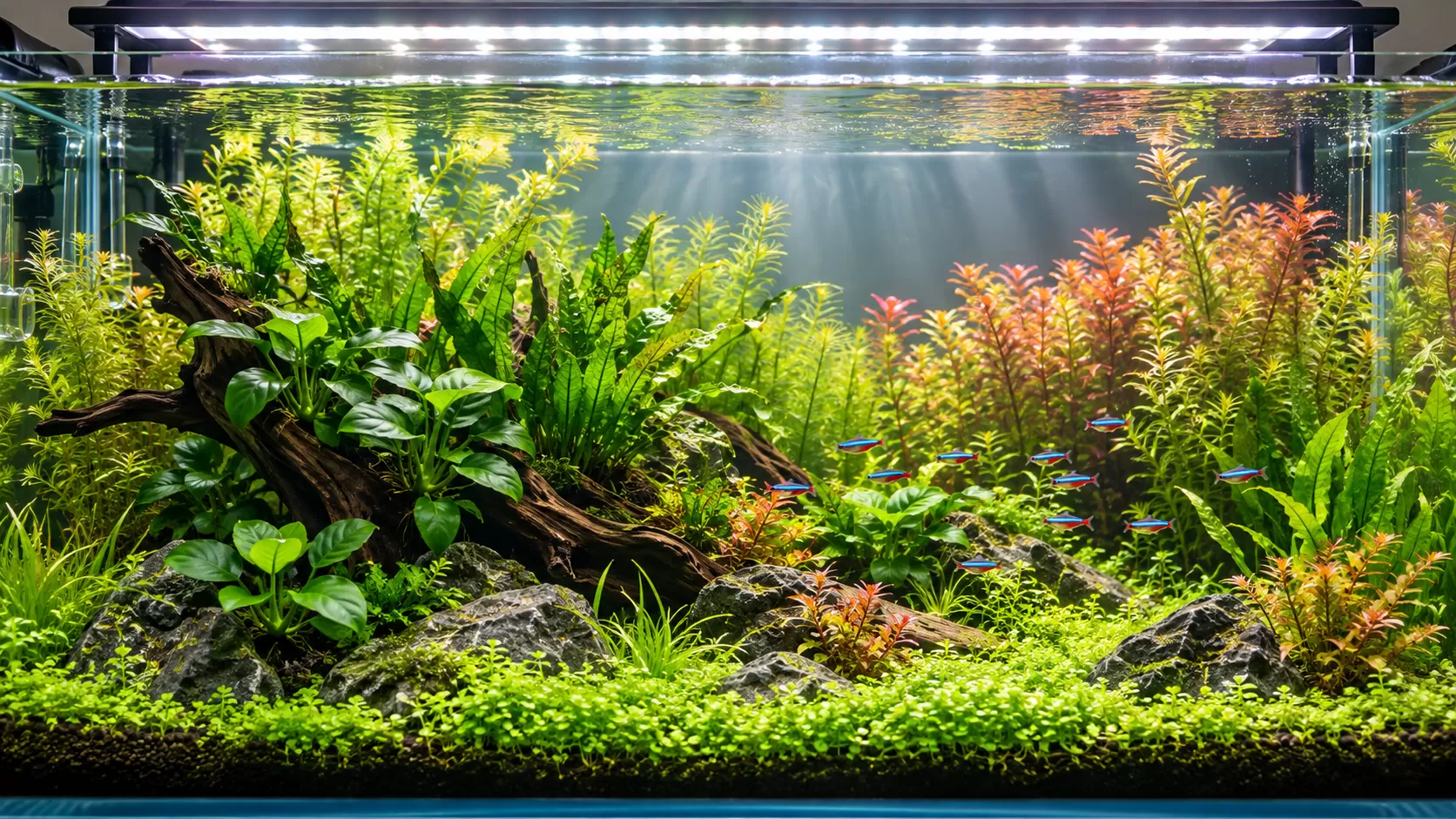 Many planted aquariums do well with a consistent daily photoperiod rather than very long lighting hours. A shorter stable schedule is usually easier for beginners to manage. If plants are healthy, there is no reason to keep extending the lighting period simply to make them grow faster.