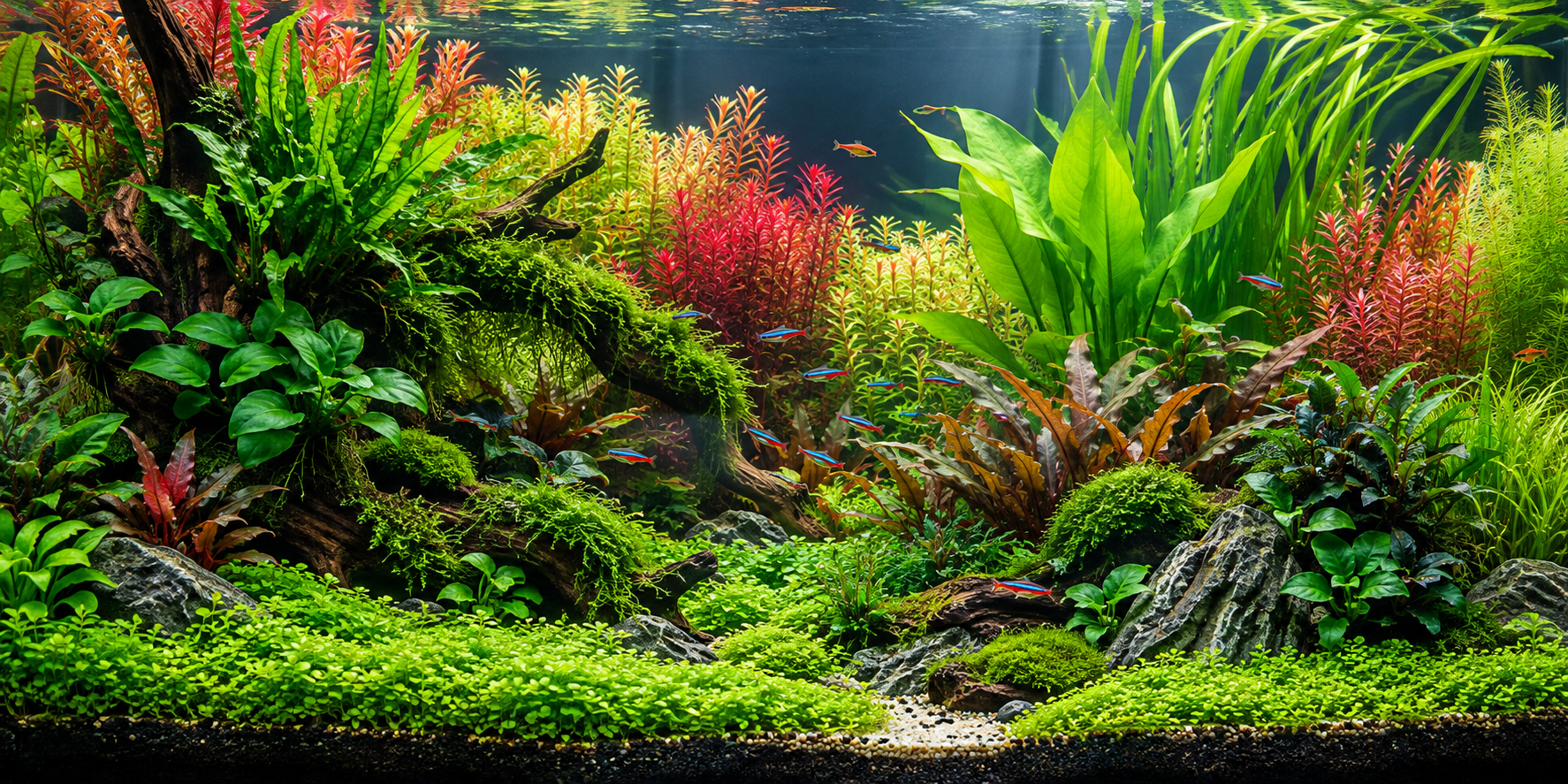
Foreground, midground and background planting is one of the simplest ways to make a planted aquarium look balanced. The idea is not complicated: shorter plants stay toward the front, medium-height plants create transition, and taller plants frame the back of the tank.
What Is the Foreground?
The foreground is the area closest to the front glass. Plants here should stay low enough to keep the main view open. Carpeting plants and compact species are commonly used in this area.
What Is the Midground?
The midground connects the low foreground to the taller background. This is also where plants around rocks and driftwood often sit. Compact Cryptocoryne, smaller Anubias and Bucephalandra can work well depending on the tank size.
What Is the Background?
The background is the rear section of the aquarium. Taller plants such as Vallisneria, larger swords and many stem plants are useful here. They can hide equipment, frame hardscape and create a sense of depth.
Choose by Mature Height, Not Shop Size
A common mistake is placing a plant based on how small it looks when purchased. Plants can change dramatically once established. Always think about mature height, width and growth habit before deciding its position.
Use Height to Create Depth
Keeping the foreground relatively open and gradually increasing plant height toward the back creates visual depth. You do not need to fill every centimetre. Open areas can make the hardscape and fish easier to see.
Consider Light and Shade
Plant placement is not only about height. A high-light foreground plant may struggle if shaded by driftwood or taller species. Slow-growing rhizome plants often work well in partially shaded areas, while demanding carpets generally need better access to light.
A Simple Layout for Beginners
A practical beginner layout might use a small open foreground, Cryptocoryne or compact epiphytes in the midground and Vallisneria or taller stems in the rear corners. This creates structure without making the tank difficult to maintain.
Common Placement Mistakes
- Putting tall plants along the front glass.
- Ignoring mature plant size.
- Planting every area densely and losing open space.
- Using demanding foreground plants in heavy shade.
- Allowing one fast-growing species to cover slower plants.
Foreground Does Not Always Mean Carpet
A planted foreground can include open sand, small stones or a few compact plants rather than a complete carpet. This is useful in low-tech aquariums where demanding carpeting plants may not be practical. Open foreground areas also make the tank look larger and create a clear swimming space for fish.
Use the Midground to Connect Hardscape and Plants
The midground is often the most important transition zone in an aquascape. Plants placed around the base of driftwood and rocks can make the hardscape feel naturally integrated instead of placed on top of the substrate. Compact Cryptocoryne, Anubias and Bucephalandra are useful choices because they can soften edges without becoming extremely tall.
Use Background Plants to Frame, Not Hide Everything
Tall background plants can create depth, but a solid wall across the entire rear glass can make the aquarium look flat. Leaving some variation in height and open areas often produces a more natural result. Taller plants can also be used to hide heaters, pipes or other equipment while keeping the main focal area visible.
Adjust Placement for Small and Large Tanks
The same species can play different roles depending on the aquarium size. A Cryptocoryne that works as a midground plant in a large aquarium may function as a background plant in a nano tank. Always compare the expected mature size with the actual tank dimensions rather than relying only on a general foreground or background label.
Trim to Preserve the Layout
Plant placement is not permanent unless growth is controlled. Fast stems can move visually from the background into every part of the aquarium if they are not trimmed. Runner plants can spread beyond their intended area. Regular pruning keeps the original foreground, midground and background structure visible.
Use Texture as Well as Height
Two plants can have a similar height but create very different visual effects. Fine-leaved stems look lighter and more delicate, while broad-leaved plants such as Anubias create stronger visual weight. Combining different textures helps separate foreground, midground and background areas without relying only on height. Use repetition so the layout still looks connected rather than like a random collection.
Create a Focal Area
A good aquascape does not need every plant to compete for attention. Choose one main focal area around an attractive piece of wood, rock or plant group, then allow surrounding plants to support it. Keeping some open space in front of or beside the focal point can make the composition easier to understand and more relaxing to view.
If you want to go deeper into this topic, read our
How to Choose Aquarium Plants for Your Tank. You can also continue with
How to Plant Aquarium Plants Properly for the next practical step.
Frequently Asked Questions
What plants should go in the foreground?
Use low-growing or compact plants that will not block the main view. In low-tech tanks, open sand or small compact plants can also work instead of a full carpet.
Can the same plant be a midground and background plant?
Yes. Placement depends on the mature size of the plant relative to the aquarium. A plant used in the midground of a large tank may become a background plant in a nano tank.
Why do background plants need trimming?
Regular trimming prevents tall or fast-growing plants from shading the midground and foreground and helps preserve the intended layout.
Final Thoughts
A balanced planted aquarium is easier to create when mature plant height, growth habit, light access and open space are planned together. Foreground, midground and background labels are useful guides, but the final position should always be adjusted to the actual tank size and aquascape.
Once the basic care requirements are in place, choose plants and equipment that fit the actual setup. You can explore the
Aquarium Plants collection at Sri Maha Aquarium. Where plant nutrition is relevant, you can also review
Neo Helios Ultra Slim planted aquarium LED light and choose it according to your aquarium’s needs.
For help selecting suitable aquarium plants, lighting, fertilizer or a complete planted aquarium setup, contact
Sri Maha Aquarium at
+91 91086 22022.