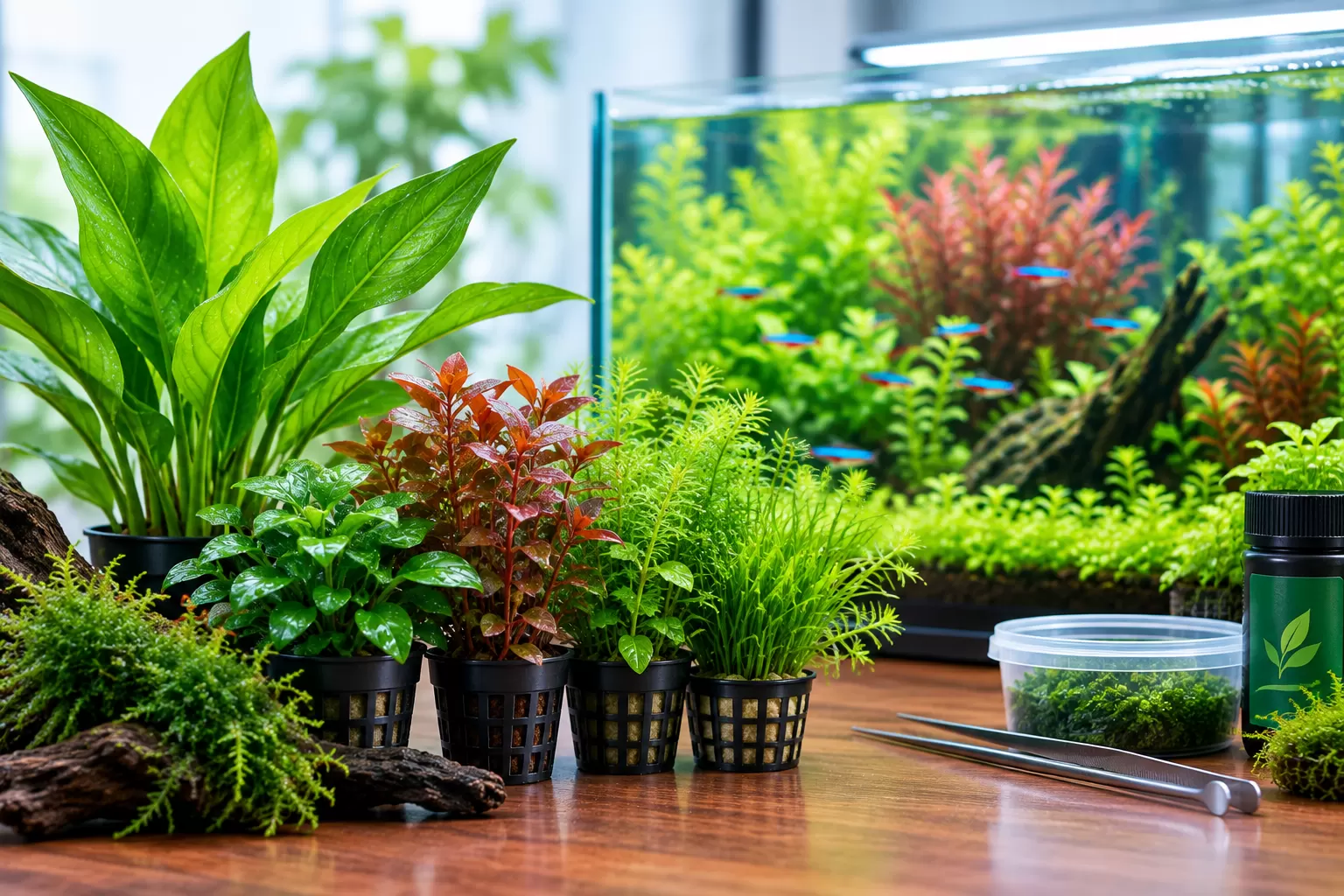
Choosing aquarium plants is easier when you stop asking “Which plant looks best?” and start asking “Which plant fits my tank?” The right plant depends on your aquarium size, light level, CO₂ setup, substrate and the amount of maintenance you want to do.
Start With Your Existing Tank
Before buying plants, look at the tank you already have. Check the aquarium size, depth, light, substrate and whether you use injected CO₂. A plant that grows beautifully in one aquarium may struggle in another simply because the conditions are different.
Match Plants to Your Light
Lighting is one of the first filters to use when choosing plants. Low-light plants are usually more forgiving and work well in many standard freshwater aquariums. High-light plants are often more demanding and may need stronger CO₂ and nutrient support.
If your tank uses a simple LED and you are not sure how strong it is, it is safer to begin with easy low- to medium-light plants rather than buying a demanding carpet or red stem plant immediately.
Decide Whether You Want a Low-Tech or CO₂ Tank
If you do not use pressurised CO₂, choose species known to perform well without it. Anubias, Java Fern, Java Moss, Vallisneria and many Cryptocoryne varieties are commonly used in low-tech setups. If you already run stable CO₂, you can consider faster-growing stems and more demanding carpeting plants.
Check the Substrate
Rooted plants depend more heavily on what is happening below the substrate surface. Plants such as Amazon Sword and Cryptocoryne benefit from good root nutrition. Rhizome plants such as Anubias and Java Fern are usually attached to rocks or driftwood and should not have the rhizome buried.
Think About Mature Plant Size
A small plant at the shop can become very large in the aquarium. This matters especially in nano tanks. Large Amazon Swords, tall Vallisneria or vigorous stem plants can quickly dominate a small aquarium. Always choose based on mature size, not only the size at purchase.
Choose Plants by Placement
Foreground plants should stay low. Midground plants should create transition around rocks and wood. Background plants are generally taller and help frame the aquascape. Choosing by placement prevents a common problem where taller plants block smaller plants and reduce the sense of depth.
Consider Growth Rate and Maintenance
Fast-growing plants can fill a tank quickly and are useful when you want a lush look, but they need more frequent trimming. Slow-growing plants are easier to maintain but may collect algae if conditions are not balanced. There is no single correct choice—the best plant is the one that fits your maintenance style.
Use a Simple Selection Checklist
- Does the plant suit my light level?
- Can it grow without injected CO₂ if I do not use CO₂?
- Will it fit the tank when fully grown?
- Does it need a nutrient-rich substrate or root tabs?
- Is it suitable for foreground, midground or background?
- How often will it need trimming?
Choose for Your Fish and Livestock
Plant choice should also consider the animals in the aquarium. Small community fish often benefit from planted areas and open swimming space. Shrimp appreciate mosses and fine-leaved plants that provide grazing surfaces. Larger fish may uproot delicate plants or need stronger-rooted species. The goal is not to fill the tank with as many plants as possible, but to create a layout that works for both the plants and the livestock.
Match Plant Speed to Your Maintenance Style
Fast-growing plants are useful when you want quick coverage, but they can require regular pruning and replanting. Slow-growing plants such as Anubias and Bucephalandra are easier to control, although they may be more vulnerable to algae if the light is too strong. If you only want to work on the aquarium once a week, choose a plant list that matches that schedule rather than a high-maintenance aquascape.
Think About the Final Layout Before Buying
It helps to divide the aquarium mentally into foreground, midground and background before you shop. Decide where you need height, where you want open space and where driftwood or rocks will be the main feature. This prevents buying several attractive plants that all compete for the same part of the aquarium. A planned plant list usually looks more natural and is easier to maintain.
Do Not Mix Too Many Difficulty Levels
A common beginner mistake is combining very easy low-tech plants with a few demanding high-light species because the demanding plants look attractive. That can lead to a setup where the easy plants thrive but the difficult plants repeatedly fail. It is better to choose plants with broadly similar requirements, then move to more demanding species when you are ready to support them properly.
Buying Plants for a New Aquarium
If the aquarium is newly set up, resist the temptation to buy every plant type at once. Start with a manageable group of species that share similar requirements. This makes it easier to understand whether the light, substrate and nutrient routine are working. Once the first group settles, you can add plants for colour, texture or more demanding areas without turning the tank into a trial-and-error mix of unrelated requirements.
Choosing Between Potted and Tissue Culture Plants
Potted plants are often larger immediately, while tissue culture plants are younger and supplied in a sterile cup. Tissue culture is useful when you want clean planting material and several small portions for an aquascape. Potted plants can give quicker visual impact. Choose based on the species, your planting plan and how quickly you want the layout to fill in rather than assuming one format is always better.
If you want to go deeper into this topic, read our
Aquarium Plant Lighting Guide. You can also continue with
Foreground, Midground & Background Aquarium Plants for the next practical step.
Frequently Asked Questions
How do I know which aquarium plants will suit my tank?
Check your tank size, light level, substrate, CO₂ availability and the amount of maintenance you want to do, then choose plants whose requirements match those conditions.
Can I mix low-light and high-light plants?
You can, but it is often harder to satisfy both groups well. Beginners usually get more consistent results by choosing plants with broadly similar light and CO₂ requirements.
Should I choose plants by their current size?
No. Always check the plant’s mature height and spread because a small nursery plant can become too large for a nano or foreground position.
Final Thoughts
Choosing aquarium plants becomes much easier when tank size, lighting, CO₂, substrate, mature plant size and maintenance level are considered together. The best plant is the one that matches the actual aquarium rather than the one that simply looks attractive at the time of purchase.
Once the basic care requirements are in place, choose plants and equipment that fit the actual setup. You can explore the
Aquarium Plants collection at Sri Maha Aquarium. Where plant nutrition is relevant, you can also review
Neo Helios Ultra Slim planted aquarium LED light and choose it according to your aquarium’s needs.
For help selecting suitable aquarium plants, lighting, fertilizer or a complete planted aquarium setup, contact
Sri Maha Aquarium at
+91 91086 22022.