Introduction
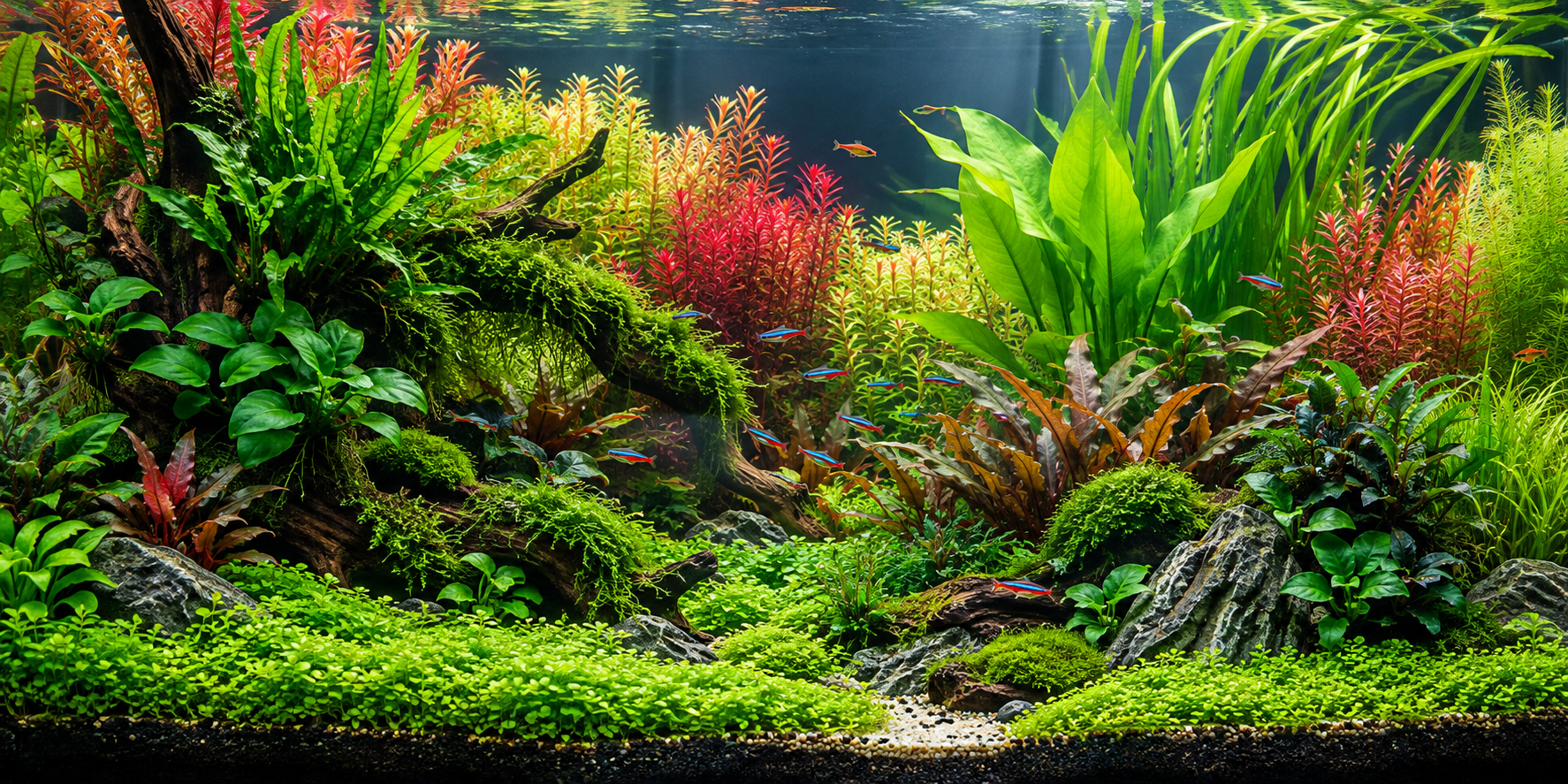
Live aquarium plants can completely change the look and feel of a freshwater aquarium. They add natural beauty, create hiding places for fish and shrimp, and help make the aquarium environment feel more balanced. For beginners, however, choosing the right plants and understanding what they need can sometimes feel confusing.
This beginner’s guide explains the basics of aquarium plants, the benefits they provide, the main types of plants available, the difference between low-tech and high-tech planted aquariums, and the essential requirements for healthy plant growth. If you are ready to explore plants for your own setup, visit our
aquarium plants in Bangalore page.
What Are Aquarium Plants?
Aquarium plants are aquatic or semi-aquatic plants that can grow submerged in freshwater aquariums. Depending on the species, they may be planted in the substrate, attached to rocks or driftwood, allowed to float on the surface, or used as foreground, midground, or background plants.
Some aquarium plants are easy to maintain and can grow with basic lighting and regular fertilization. Others need stronger lighting, carbon dioxide supplementation and more carefully managed nutrients.
Benefits of Live Aquarium Plants
- Natural appearance: Plants make the aquarium look more realistic and attractive.
- Shelter: They provide hiding and resting places for fish, shrimp and fry.
- Nutrient use: Healthy plants absorb nutrients from the water and substrate.
- Oxygen production: During photosynthesis, plants release oxygen into the aquarium water.
- Algae competition: Healthy plant growth can reduce opportunities for excessive algae growth.
- Better aquascaping: Different plant shapes, heights and colours create depth and structure.
Types of Aquarium Plants
Foreground Plants
Foreground plants are shorter species placed near the front of the aquarium. They are used to create open areas, low plant groups or carpet-like effects depending on the species and growing conditions.
Midground Plants
Midground plants are medium-height plants positioned between the foreground and background. They help connect the different layers of an aquascape and can be placed around rocks or driftwood.
Background Plants
Background plants are taller species commonly planted toward the rear of the aquarium. They can hide equipment, create a natural backdrop and add height to the overall layout.
Epiphyte Plants
Epiphyte plants such as many Anubias and Java fern varieties are commonly attached to rocks or driftwood instead of being buried deeply in the substrate. Their rhizomes should generally remain exposed.
Floating Plants
Floating plants grow at or near the water surface. They can provide shade and shelter, but excessive coverage can reduce the amount of light reaching plants below.
Tissue Culture Plants
Tissue culture plants are grown in sterile containers under controlled conditions. They are generally free from snails and many common aquarium pests while sealed, making them a popular choice for planted aquariums.
Low-Tech vs High-Tech Planted Aquariums
Low-Tech Planted Aquarium
A low-tech planted aquarium normally uses moderate lighting, does not rely heavily on pressurised CO₂ injection, and focuses on hardy plants. It is usually easier for beginners because it can be maintained with fewer specialised systems.
Low-tech setups can work well with plants such as Anubias, Java fern and many Cryptocoryne varieties, depending on the aquarium conditions.
Related guides:
Low-Tech Planted Aquarium: Why It Is Ideal for Beginners and
Best Low-Tech Aquarium Plants Without CO₂.
High-Tech Planted Aquarium
A high-tech planted aquarium normally combines stronger lighting, controlled CO₂ supplementation and a planned fertilization routine. This can support faster growth and a wider range of demanding plants, but it also requires better control of light, nutrients, CO₂ and maintenance.
Beginners do not need to start with a high-tech system. A simple low-tech planted aquarium is often a better way to learn how plants respond to lighting, fertilization and water conditions.
What Do Aquarium Plants Need to Grow?
Light
Plants need light for photosynthesis. The amount required depends on the species. Easy plants may grow well under moderate lighting, while demanding plants may need stronger and more carefully controlled lighting.
More light is not always better. Excessive light without enough nutrients or CO₂ can encourage algae and make the aquarium harder to balance.
For planted setups, you can explore our
aquarium lighting collection, including options such as the
Sobo COB Planted Aquarium LED Light and
Neo Helios Ultra Slim Planted Aquarium LED Light.
CO₂
Carbon dioxide is one of the main resources plants use during photosynthesis. Fish respiration and natural biological activity provide some CO₂, which may be enough for many low-tech plants.
Pressurised CO₂ systems are commonly used in higher-demand planted aquariums because they can support faster and more consistent plant growth when combined with suitable lighting and nutrients.
Nutrients
Aquarium plants require nutrients to produce new leaves, roots and stems. These include macronutrients and micronutrients. Depending on the setup, nutrients may come from fish waste, the substrate, root fertilization or liquid aquarium fertilizers.
Both nutrient deficiency and excessive fertilization can create problems, so a balanced routine should be matched to the plants and aquarium conditions.
If your planted aquarium needs a complete liquid fertilization routine, you can also view
APT Complete All-in-One Planted Aquarium Fertilizer.
Substrate
The substrate supports rooted plants and can also provide nutrients depending on the material used. Aquasoil and other nutrient-rich substrates are commonly used in planted aquariums, while inert sand or gravel can also work for many plants when suitable fertilization is provided.
Epiphyte plants do not depend on being planted deeply in substrate and are usually attached to rocks or driftwood.
Water Conditions
Stable water conditions are important for aquarium plants. Temperature, pH, hardness, water movement and nutrient availability can all influence plant growth.
Different plants have different preferences, so beginners should choose species that suit their aquarium conditions instead of constantly changing the water for difficult plants.
What Beginners Should Know Before Buying Aquarium Plants
- Know your aquarium size: Choose plants that suit the available height and swimming space.
- Check your lighting: Match plants to the strength and type of light you already have.
- Decide whether you will use CO₂: If not, begin with low-tech plants.
- Plan plant placement: Use foreground, midground and background plants to create balance.
- Check growth rate: Fast-growing plants may need frequent trimming, while slower plants usually need less maintenance.
- Do not bury rhizomes: Plants such as Anubias and Java fern are normally attached to rocks or driftwood.
- Expect an adjustment period: Some plants may lose older leaves before producing new submerged growth.
- Start simple: A smaller number of easy species is often better than buying many demanding plants at once.
If you are choosing plants for a new or existing planted aquarium, browse our
aquarium plants in Bangalore collection and select plants based on your tank size, lighting, CO₂ plan and maintenance level.
Frequently Asked Questions (FAQs)
Do aquarium plants need CO₂?
No. Many easy aquarium plants can grow without pressurised CO₂. Additional CO₂ can improve growth for many species when lighting and nutrients are also managed properly.
How many hours of light do aquarium plants need?
There is no single lighting duration that suits every aquarium. Beginners commonly start with a controlled photoperiod and adjust it based on plant growth and algae development.
Can aquarium plants grow in sand or gravel?
Yes. Many aquarium plants can grow in sand or gravel, especially when nutrients are supplied through root tabs or liquid fertilization. Epiphyte plants can also be attached directly to rocks or driftwood.
What aquarium plants are easiest for beginners?
Common beginner-friendly choices include Anubias, Java fern, many Cryptocoryne varieties and other low-tech species. The best choice depends on your aquarium size, lighting and whether you plan to use CO₂.
Why are my aquarium plants turning yellow?
Yellowing can have several causes, including nutrient deficiency, unsuitable lighting, plant adjustment after introduction, damaged older leaves or other growing-condition problems.
Do I need aquasoil for a planted aquarium?
No. Aquasoil can be useful for rooted plants, but it is not compulsory for every planted aquarium. Many low-tech aquariums can be successful with sand or gravel when the plants receive appropriate nutrients.
Can beginners keep a planted aquarium?
Yes. Beginners can successfully keep planted aquariums by starting with easy plants, moderate lighting, stable water conditions and a simple maintenance routine.
Important Articles
Final Thoughts
Aquarium plants can make a freshwater aquarium more natural, attractive and enjoyable. Beginners do not need complicated equipment to get started. The most important step is choosing plants that match the aquarium’s lighting, substrate, water conditions and maintenance level.
Start with a simple combination of easy foreground, midground, background or epiphyte plants, observe how they grow, and make gradual adjustments. Once the basics are understood, you can explore more advanced planted-aquarium techniques, stronger lighting, CO₂ supplementation and more demanding plant varieties.