Planting aquarium plants correctly matters because different plants grow in different ways. Some need their roots buried, some should be planted as individual stems, and others can rot if their rhizome is pushed under the substrate. The first step is always to identify the plant type.
Prepare the Plant First
Before planting, remove obviously damaged leaves and inspect the roots. If the plant comes in a plastic pot, carefully remove the pot and gently clean away as much rock wool as possible without tearing healthy roots. Tissue culture plants should be rinsed well to remove the gel.
How to Plant Rooted and Rosette Plants
Cryptocoryne, Amazon Sword and similar rosette plants should be planted with the roots below the substrate and the crown or central growth point above it. Planting the crown too deeply can cause the base to deteriorate.
How to Plant Stem Plants
Separate healthy stems and insert the lower portion into the substrate. Planting individual stems or small groups with a little spacing gives them better access to light and water movement. Very dense bunches may look full on day one but can become difficult to maintain.
How to Plant Carpeting Plants
Carpeting plants are usually divided into small portions and planted across the foreground with gaps between them. This encourages them to spread naturally and avoids one thick clump that struggles in the centre.
How to Plant Anubias, Java Fern and Bucephalandra
These plants grow from a rhizome. The rhizome should normally stay exposed. They are commonly attached to rock or driftwood using thread, fishing line or a small amount of suitable aquarium-safe adhesive.
How to Plant Moss
Moss can be spread thinly over driftwood, rocks or mesh. Secure it gently until it attaches. Avoid making a very thick layer because the lower sections may receive less light and circulation.
How to Plant Tissue Culture Plants
Remove the plant carefully from the cup, rinse away the culture gel and divide it into smaller portions. The exact planting method depends on the species. Carpeting plants are divided into small plugs, while stems and rooted plants are planted according to their normal growth habit.
Common Planting Mistakes
- Burying the rhizome of Anubias, Java Fern or Bucephalandra.
- Covering the crown of rooted plants.
- Planting stem plants too densely.
- Leaving large amounts of rock wool around the roots.
- Ignoring the mature height of the plant.
What to Expect After Planting
Some newly planted species may take time to adapt. Leaves grown above water at the nursery may deteriorate after submersion while new underwater leaves develop. Avoid repeatedly moving a plant unless the original placement is clearly wrong.
Use the Right Tools
Long aquascaping tweezers make planting much easier, especially in deeper tanks. Fine scissors are useful for trimming damaged roots and stems before planting. You do not need a large tool collection, but clean tools give you better control and reduce the chance of crushing delicate tissue while pushing plants into the substrate.
How Deep Should Roots Go?
Roots should be covered well enough to hold the plant securely, but the crown or rhizome must not be buried when the species should keep it exposed. If a newly planted rooted plant keeps floating up, insert the roots a little deeper while keeping the central growth point above the substrate. Avoid packing substrate tightly around delicate stems because this can damage them.
Plant With Future Growth in Mind
Spacing matters. Stem plants placed too close together can shade each other as they grow. Large rosette plants need room for leaves to spread. Carpeting plants should be divided into several small portions instead of planted as one lump. Good spacing may look sparse for the first few weeks, but it usually creates a healthier and more natural result later.
What to Do After Planting
After planting, fill or refill the aquarium carefully so the water flow does not pull newly planted stems from the substrate. Keep the lighting schedule stable and avoid making several changes at once. If some leaves melt during adaptation, remove the badly damaged tissue but do not keep uprooting the plant to inspect the roots unless there is a clear problem.
When to Replant or Move a Plant
Move a plant when its mature size no longer suits the position, when it is being heavily shaded or when it was planted incorrectly. Avoid repositioning plants repeatedly just because they do not look perfect during the first few days. Rooted plants in particular usually establish better when they are allowed to settle.
Planting Into Aqua Soil vs Inert Substrate
Aqua soil is softer and usually easier to plant into, but delicate stems can still float if they are inserted too shallowly. Inert gravel or sand may need more careful planting because it provides less natural grip and may contain fewer nutrients. Root-feeding plants in inert substrates can benefit from targeted root nutrition once they are established.
Plant Before or After Filling the Aquarium?
Many aquascapers plant while the substrate is damp and the tank is only partly filled because it provides better visibility and control. If the aquarium is already full, you can still plant successfully with long tweezers. In either case, work slowly and avoid stirring the substrate excessively, especially around newly planted stems and small carpeting portions.
If you want to go deeper into this topic, read our
Foreground, Midground & Background Aquarium Plants. You can also continue with
Aquarium Plant Maintenance Guide for the next practical step.
Frequently Asked Questions
Should Anubias and Java Fern be buried in the substrate?
Their roots can touch or enter the substrate, but the rhizome should normally remain exposed. Burying the rhizome can cause it to deteriorate.
How deep should rooted aquarium plants be planted?
Cover the roots securely while keeping the crown or central growth point above the substrate.
Should tissue culture gel be removed before planting?
Yes. Rinse away the culture gel gently and divide the plant into smaller portions according to its growth habit before planting.
Final Thoughts
Planting aquarium plants successfully becomes much easier when the planting method matches the plant’s natural growth habit. Rooted plants, stems, rhizome plants, mosses and carpeting plants should not all be planted in the same way, and correct placement from the beginning reduces avoidable problems later.
Once the basic care requirements are in place, choose plants and equipment that fit the actual setup. You can explore the
Aquarium Plants collection at Sri Maha Aquarium. Where plant nutrition is relevant, you can also review
APT Complete planted aquarium fertilizer and choose it according to your aquarium’s needs.
For help selecting suitable aquarium plants, lighting, fertilizer or a complete planted aquarium setup, contact
Sri Maha Aquarium at
+91 91086 22022.

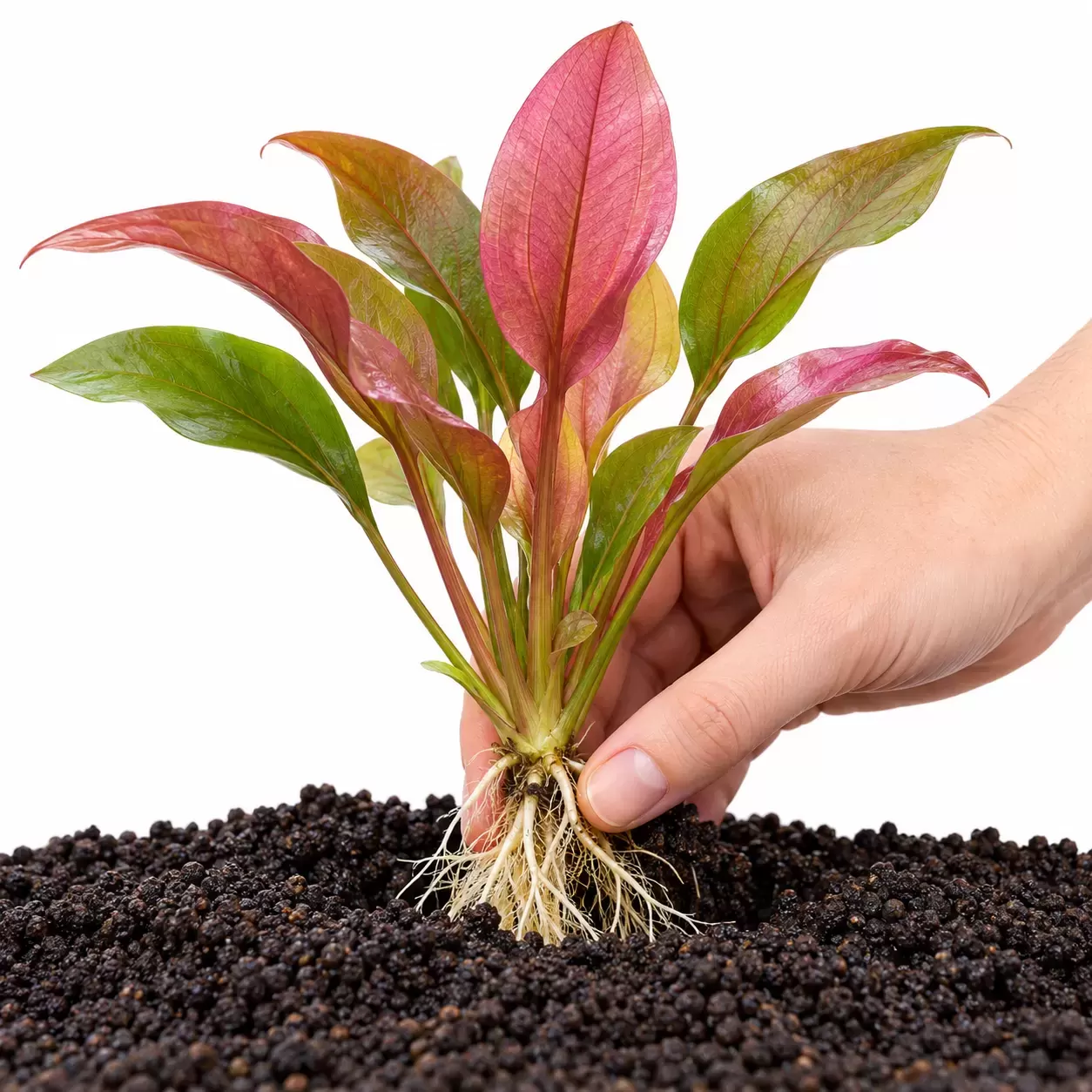 Cryptocoryne, Amazon Sword and similar rosette plants should be planted with the roots below the substrate and the crown or central growth point above it. Planting the crown too deeply can cause the base to deteriorate.